2010 FIFA World Cup
 Spain
Spain
 Netherlands
 Uruguay
Group Stage
Full Standings →


Knockout Stage
round of 16
semi-finals
third-place match
final
Tournament Overview
South Africa 2010 and why this World Cup felt different
No World Cup before it had been played on African soil. When the tournament kicked off at Soccer City in Johannesburg on 11 June 2010, it carried a weight that went far beyond football. This was the culmination of a decades-long dream for a continent that had given the game some of its most passionate supporters and received comparatively little in return. FIFA's rotation policy, short-lived as it turned out, had handed Africa its moment, and South Africa seized it.
Nelson Mandela's presence over the course of the tournament gave the whole event a dimension no sporting competition can manufacture. The former president had spoken openly about the role football played during his imprisonment on Robben Island, describing how the game made him feel alive even in confinement. When South Africa won the right to host, Mandela lifted the trophy at the announcement ceremony, and that image set the emotional register for everything that followed. The tournament was his, and in many ways the continent's.
Then there was the vuvuzela. That single-pitched plastic horn, blown continuously from the first whistle to the last, divided opinion like nothing else in recent World Cup history. Television audiences across the world heard it as a wall of noise, a relentless drone that drowned out commentary and crowd chanting alike. Inside the stadiums it was something else entirely, a vibration you felt as much as heard, a sound that was irreducibly South African. Love it or despise it, nobody who watched a single minute of South Africa 2010 has forgotten it.
The Jabulani ball produced its own controversy. Adidas designed it with fewer panels than any previous World Cup ball, and the result was a flight pattern that goalkeepers and strikers alike struggled to read. Roberto Carlos compared it to a beach ball. Julio César called it a supermarket toy. The statistics told their own story: South Africa 2010 produced just 145 goals across 64 matches, the lowest total in the history of the 64-game format. Whether the ball deserves the blame remains debated, but its effect on the tournament's rhythm was real and widely felt.
The 2010 FIFA World Cup groups, who went through and who went home early
The group stage of any World Cup sorts the pretenders from the contenders, but South Africa 2010 went further than most. It produced some of the most dramatic early exits in the tournament's history alongside performances that signalled exactly where the real threats were coming from. By the time the dust settled on the eight groups, the map of the knockout stage looked nothing like the pre-tournament predictions.
The group stage shocks that nobody saw coming
France arrived in South Africa as a nation in deep football trouble, but few expected the complete implosion that followed. Nicolas Anelka was sent home after a half-time confrontation with coach Raymond Domenech, the squad went on strike and refused to train, and a team that had reached the final four years earlier finished bottom of Group A without winning a single match. It remains one of the most public and damaging collapses a major footballing nation has ever suffered at a World Cup.
Italy's exit was quieter but no less significant. The defending champions, winners in Germany just four years earlier, could not find a way through a group that included Paraguay, Slovakia and New Zealand. They drew all three matches and went home. What made it historically remarkable was that it was only the beginning of a pattern: Italy in 2010, Spain in 2014, Germany in 2018, three successive title holders eliminated at the group stage in what became one of the sport's strangest recurring statistics.
South Africa's elimination carried a particular pain. The hosts became the first nation in World Cup history to be knocked out at the group stage on home soil, despite winning their final group match against France. They finished behind Uruguay and Mexico and went out to a tournament that continued without them. The stadiums stayed full, the vuvuzelas kept sounding, and the country threw itself behind the remaining African sides, but the absence of Bafana Bafana from the knockout rounds left a wound that no amount of atmosphere could fully heal. North Korea's return after 44 years produced one of the tournament's most talked-about results when Portugal put seven past them without reply in their final group game, a scoreline that remains one of the heaviest defeats in modern World Cup football.
The sides that impressed in the groups
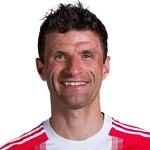
Germany announced themselves immediately. Joachim Löw's side were fast, direct and devastatingly clinical, scoring four against Australia, four against England in the round of 16 to come, and playing with a freedom that suggested a team genuinely capable of going all the way. Thomas Müller scored twice in the group stage and was already looking like the player of the tournament before the knockout rounds had even begun.
Uruguay were less spectacular but no less effective. Oscar Tabárez had built a side that knew exactly what it was: compact, hard to beat, and dangerous on the counter through Luis Suárez and Edinson Cavani. Diego Forlán was playing some of the best football of his career, and Uruguay topped Group A with a quiet authority that more glamorous sides failed to match. They were the kind of team that you respected rather than feared, right up until the moment they made you fear them.
Ghana carried the hopes of an entire continent into the knockout stage. They topped Group D ahead of Germany, played with energy and pace that made them genuinely difficult to contain, and generated a noise inside the stadiums every time they attacked that no other team could match in those group weeks. New Zealand deserve a footnote that history has been too quick to overlook: they drew all three of their group matches, against Slovakia, Italy and Paraguay, and left South Africa as the only unbeaten team in the tournament. They were also eliminated. Football has few more perfectly absurd outcomes than that.
| Group | Winner | Runner-up | Notable elimination |
|---|---|---|---|
| A | Uruguay | Mexico | France (bottom, 0 pts) |
| B | Argentina | South Korea | South Africa (hosts, group stage) |
| C | England | United States | Algeria |
| D | Germany | Ghana | Australia |
| E | Netherlands | Japan | Cameroon |
| F | Paraguay | Slovakia | Italy (defending champions) |
| G | Brazil | Portugal | Ivory Coast |
| H | Spain | Chile | Honduras |
The knockout stage — Europe against South America
The round of 16 cleared the way and by the quarter-finals a pattern had emerged that felt almost too neat to be real. On one side of the bracket stood Europe's best. On the other, the survivors of South America. What followed was a series of matches that settled an unofficial continental rivalry with a finality nobody had quite anticipated, and produced one moment of pure controversy that the game is still arguing about.
A quarter-final sweep for Europe
Germany dismantled Argentina 4–0 in what remains one of the most one-sided quarter-finals in World Cup history. Diego Maradona's side, who had swaggered through the group stage with Lionel Messi at his most dangerous, had no answer for the pace and structure of Löw's team. Müller scored twice, Klose twice, and Argentina barely threatened. The Netherlands beat Brazil 2–1 in a match that handed the Brazilians their first World Cup defeat outside of Europe or penalty shootouts since 1950. Wesley Sneijder scored twice. Spain edged Paraguay 1–0 in a match that required genuine resilience, surviving two penalty appeals and a Casillas save before David Villa settled it.
The match that defined the tournament did not involve any of those three ties. Ghana against Uruguay produced the most debated moment of South Africa 2010, and arguably of any World Cup in the modern era. In the final seconds of extra time, with the score at 1–1, Dominic Adiyiah headed toward goal and Luis Suárez blocked it on the line with his hand. The referee pointed to the spot and sent Suárez off. Asamoah Gyan struck the penalty against the crossbar. Uruguay survived the shootout. Africa's last remaining team went home, and Suárez walked off the bench to celebrate in a manner that ensured nobody would forget his role in what had just happened.
The tactical picture across the knockout stage told its own story. The goals that had flowed in the group stage became harder to find as the tournament progressed. Teams sat deeper, pressed higher in short bursts and looked to suffocate opponents rather than outplay them. The Jabulani continued to make long-range efforts unpredictable. Matches were decided by single goals, moments of individual quality or defensive errors rather than sustained attacking play. It was not always beautiful, but it produced a tension that made every knockout match feel genuinely precarious until the final whistle.
By the time the semi-finals arrived, South America had been reduced to a single representative. Uruguay stood alone, having eliminated Ghana in circumstances that left a bitter taste on the continent. Three of the four semi-finalists were European. The shape of the tournament had been decided not by luck or draw but by forty-five days of attrition, and the conclusion it was pointing toward was one nobody had fully predicted before a ball was kicked.
The semi-finals and the making of a final nobody had seen before
The first semi-final between the Netherlands and Uruguay produced one of the great individual moments of the tournament before it had barely started. Giovanni van Bronckhorst, in what would prove to be his last World Cup match, struck a left-footed shot from thirty yards that flew into the top corner after eighteen minutes. It was the kind of goal that announces a final rather than a semi-final, and it set the tone for a match of genuine quality. Uruguay fought back through Forlán and Álvaro Pereira, but Sneijder and Robben pushed the Netherlands through 3–2 to reach their first final since 1978.
Forlán's performance across those ninety minutes deserved a larger stage than a losing semi-final. He had carried Uruguay through the tournament with a combination of technique, vision and sheer competitive intensity that few players at any World Cup produce across six or seven matches. He would win the Golden Ball as the tournament's best player, a prize given to a man whose side finished fourth. That tells you something about how good he was, and something about how cruelly football distributes its rewards.
Spain beat Germany 1–0 in the other semi-final through a single Carles Puyol header from a Xavi corner in the 73rd minute. Vicente del Bosque's side controlled possession, suffocated Germany's counter-attacking game and were patient to a degree that looked almost serene under pressure. It was a performance that confirmed what the tournament had been slowly demonstrating: this Spanish team did not need to score three goals to win a match. They needed one, and they would find it.
The final was confirmed. Spain against the Netherlands. For the first time in the history of the competition, the final did not feature Brazil, Italy, Germany or Argentina. The four nations that between them had won every single World Cup ever contested were all watching from home. A new champion was guaranteed. The question was which nation, for the first time in their history, would lift the trophy on the evening of 11 July in Johannesburg.
The 2010 FIFA World Cup final: Iniesta's moment in extra time
The final at Soccer City on 11 July 2010 was many things, but it was not a beautiful football match. What it was, from the first whistle to the 116th minute, was a test of nerve, of system, of how much punishment a team could absorb and still believe the goal was coming. Spain passed that test. The Netherlands, in choosing the approach they chose, failed one of their own.
Howard Webb handed out 14 yellow cards across the 120 minutes, more than double the previous record for a World Cup final. The Netherlands made nine of those bookings their own, with challenges that went beyond hard defending into something more deliberate. Nigel de Jong's studs-up kick into Xabi Alonso's chest in the first half was one of the most reckless fouls seen in a final of any tournament, and Webb's decision not to show a red card remains debated to this day. John Heitinga received his second yellow late in extra time and walked, leaving the Netherlands with ten men for the final minutes.
The moment that came closest to changing everything arrived in the 60th minute. Arjen Robben, released by Sneijder in behind the Spanish defence, bore down on Iker Casillas one on one with the goal at his mercy. Casillas spread himself and deflected the shot away with an outstretched leg. It was the save of the tournament, and in the context of what followed, one of the most consequential moments in Spanish football history. Had that gone in, the story of 2010 ends entirely differently.
It did not go in. And so the match reached extra time, and the 116th minute, and Cesc Fàbregas found Andrés Iniesta arriving late into the area. The volley that followed was not a thunderbolt. It was a composed, precise finish from a composed, precise player, and it settled the match, the tournament and a question that Spanish football had been asking itself for a generation. Iniesta's goal was the latest winning goal ever scored in a World Cup final, and he celebrated it by pulling off his shirt to reveal a tribute to his friend and teammate Dani Jarque, who had died the previous year. The image became the defining photograph of the tournament.
Spain were world champions for the first time. The records they set in winning told the full story of how they did it. Eight goals scored across seven matches, the fewest ever by a World Cup winning team. Just two goals conceded. The only team in history to win the tournament after losing their opening game, a 1–0 defeat to Switzerland in the group stage. And the first European nation ever to win a World Cup held outside of European soil. Every previous tournament played in the Americas or Africa had been won by a South American side. Spain ended that, in Johannesburg, through 116 minutes of patience and one moment of Iniesta.
| Match | Round | Result | Spain goals |
|---|---|---|---|
| Switzerland | Group stage | Lost 0–1 | 0 |
| Honduras | Group stage | Won 2–0 | 2 |
| Chile | Group stage | Won 2–1 | 2 |
| Portugal | Round of 16 | Won 1–0 | 1 |
| Paraguay | Quarter-final | Won 1–0 | 1 |
| Germany | Semi-final | Won 1–0 | 1 |
| Netherlands | Final | Won 1–0 (aet) | 1 |
Players and awards, the records that defined South Africa 2010
South Africa 2010 did not produce a single dominant individual performance in the way that some tournaments do. What it produced instead was a collection of players who elevated themselves across six or seven matches, and whose records, when set side by side, tell the story of a tournament where quality was distributed more evenly across the finalists than almost any World Cup before it.
Thomas Müller and the Golden Boot
Thomas Müller was 20 years old when he arrived in South Africa. He left it with the Golden Boot and the Best Young Player award, becoming the first player in World Cup history to win both prizes at the same tournament. His five goals came with three assists, a combined contribution that no other player in the tournament came close to matching. He was not the most technically gifted player on the pitch in any of the matches he played, but he read the game with a maturity that made him look a decade older than he was.
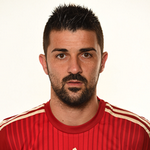
Miroslav Klose added two more goals to a World Cup tally that was already among the greatest in the history of the competition, finishing the tournament on 14 goals across four editions and moving to within two of Ronaldo's all-time record. Four players finished the tournament level on five goals: Müller, David Villa, Wesley Sneijder and Diego Forlán. The Golden Boot was separated by assists, with Müller's three giving him the prize ahead of Villa, who played 635 minutes to Sneijder's 652. The margins were razor thin across the board.
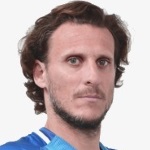
Diego Forlán and the Golden Ball
Diego Forlán's tournament deserves to be remembered as one of the great individual performances in World Cup history. Five goals, one assist, a free kick against Germany in the semi-final that flew into the top corner, and a level of consistency across every match Uruguay played that carried a team of genuine but limited resources to within one penalty shootout of the final. The Golden Ball, awarded by FIFA to the tournament's best player, went to Forlán without serious argument. He was the best player at the 2010 World Cup, and his side finished fourth.
Uruguay's fourth place meant that Forlán collected his prize as the losing side in the third-place match, a 3–2 defeat to Germany that did nothing to diminish what he had produced across the tournament. The argument that 2010 generated one of the most decorated losing semi-finalists in World Cup history is difficult to contest. Forlán with the Golden Ball, Uruguay with Suárez and Cavani alongside him, a team that reached the last four without ever being favoured to do so. In a tournament that guaranteed a first-time champion, Forlán's story was the one that carried the most weight for those who watched it unfold.
| Player | Nation | Goals | Assists | Minutes played |
|---|---|---|---|---|
| Thomas Müller | Germany | 5 | 3 | 574 |
| David Villa | Spain | 5 | 1 | 635 |
| Wesley Sneijder | Netherlands | 5 | 1 | 652 |
| Diego Forlán | Uruguay | 5 | 1 | 654 |
| Gonzalo Higuaín | Argentina | 4 | 0 | 331 |
| Miroslav Klose | Germany | 4 | 1 | 419 |
| Asamoah Gyan | Ghana | 3 | 0 | 540 |
| Luís Fabiano | Brazil | 3 | 0 | 432 |
| Landon Donovan | United States | 3 | 2 | 570 |
| Luis Suárez | Uruguay | 3 | 0 | 357 |
South Africa 2010 in the record books
Every World Cup leaves a statistical footprint, and the one left by South Africa 2010 is stranger and more interesting than most. This was a tournament of firsts, of records broken quietly and records set that nobody had seen coming.
The 145 goals scored across 64 matches made it the lowest-scoring World Cup in the history of the 64-game format, edging below the 147 registered at Germany 2006 and continuing a downward trend that had been building since France 1998. The Jabulani, the altitude of several venues, the tactical discipline of the knockout rounds — all of it contributed to a tournament where goals felt earned rather than given, where a single strike was enough to decide match after match at every stage.
Spain winning with eight goals is a record that still looks improbable on paper. The previous lowest for a champion was eleven, shared by Brazil in 1994, England in 1966 and Italy in 1938. Spain did not just edge that record, they demolished it. Seven matches, eight goals, and a trophy. Del Bosque's side also conceded just twice across the entire tournament, keeping a clean sheet through every round of the knockout stage. No team had ever won the World Cup without conceding in the knockout phase before. Spain managed it while scoring once per game.
The geographical record mattered too, and not only as a statistic. Every World Cup held outside Europe up to that point had been won by a South American nation. Brazil, Argentina, Uruguay — the Americas had always claimed the trophy when the tournament travelled away from European soil. Spain ended that in Johannesburg, and in doing so closed a chapter that had defined the intercontinental rivalry at the heart of the competition for eighty years.
Then there is New Zealand. They drew with Slovakia. They drew with Italy. They drew with Paraguay. They left South Africa with three points, a positive goal difference, and an elimination certificate. No other team in the tournament went unbeaten. No other unbeaten team in World Cup history has ever gone home at the group stage. It is the kind of record that only football produces, and only the World Cup preserves with the seriousness it deserves.