Argentina vs Algeria 2026 World Cup prediction
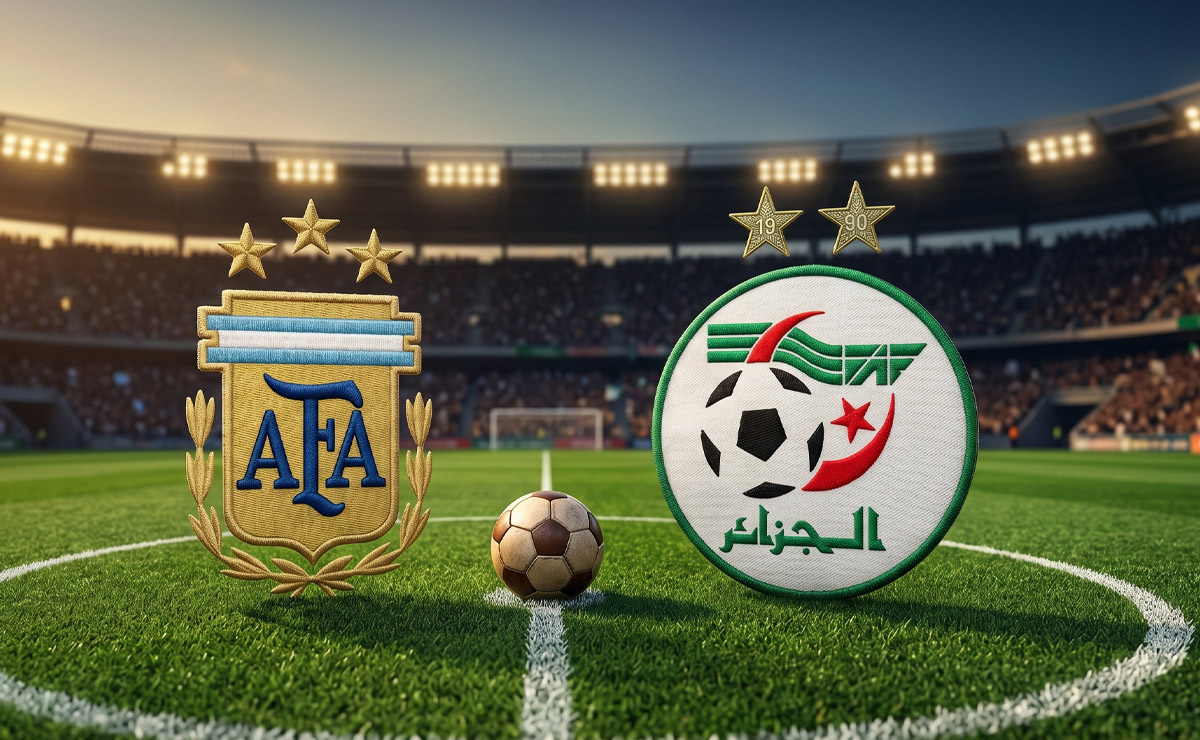
The 2026 World Cup opens a new chapter in the tournament's history, forty-eight teams, three host nations, and a group stage bigger than anything football has seen before. Somewhere in the middle of all that expansion, Group J quietly became one of the most straightforward matchups on paper and one of the most emotionally loaded on closer inspection. A three-time world champion against a side returning from a twelve-year absence, a generational farewell tour against a nation rediscovering its place on the biggest stage. Argentina vs Algeria at Arrowhead Stadium on June 16 is not the flashiest fixture of the opening round. It might, however, be one of the most telling.
Match details for Argentina vs Algeria at the 2026 World Cup
Few group stage draws in recent memory have felt quite so lopsided on paper. Argentina lands in Group J alongside Algeria, Austria, and Jordan, a group that most analysts quietly labeled "Argentina's group" the moment the balls were drawn. And honestly, it is hard to argue. Three of the four sides will be fighting for survival while one of them is defending a world title and showing up ranked first on the planet.
The match itself is scheduled for June 16, 2026, at Arrowhead Stadium in Kansas City, Missouri, kicking off at 9:00 PM ET. It will be Argentina's opening game of the tournament, which means Lionel Messi and company will be looking to set the tone early. No pressure, just the eyes of roughly a billion people watching.
This is also the first World Cup held with 48 teams, an expansion FIFA has been building toward for years. More nations, more groups, more matches, and for Algeria, a return to the global stage for the first time since 2014. The format gives every group four teams instead of the usual four splitting into three, which means the stakes in each opening fixture are slightly different than what we have been used to. Getting off to a winning start matters more than ever.
| Nation | FIFA ranking | World Cup appearances | Best result |
|---|---|---|---|
| Argentina | 1 | 18 | Champions (1978, 1986, 2022) |
| Austria | 25 | 7 | Runners-up (1954) |
| Algeria | 28 | 4 | Round of 16 (2014) |
| Jordan | 67 | 1 | Group stage (debut) |
Group J at a glance
Group J is, on paper, one of the clearest groups of the entire tournament. Argentina are overwhelming favourites to win it, with Jordan making their World Cup debut and Algeria returning after a twelve-year absence. Austria are the only side with a realistic chance of pushing La Albiceleste, and even that feels like a stretch given the gap in squad quality.
What makes the group interesting from a historical perspective is the contrast in World Cup pedigree. Argentina have lifted the trophy three times. Austria have reached a final, albeit seventy years ago. Algeria carry the memory of one of the great upsets in tournament history, their 2-1 win over West Germany in 1982. And Jordan are simply thrilled to be there.
Arrowhead Stadium and the Kansas City setting
Arrowhead Stadium is one of the most iconic venues in American sport, home to the Kansas City Chiefs and their famously loud fanbase. It holds around 73,000 spectators and has a reputation for generating an atmosphere that genuinely unsettles visiting teams. For a football match, that energy is going to feel extraordinary, even if the crowd has spent most of its life watching a very different kind of football.
June 16 will mark the first time Arrowhead hosts a FIFA World Cup fixture. The ground has seen Super Bowls, playoff games, and sold-out concerts, but nothing quite like this. For Argentina, it will feel like a home game regardless, given the size of the Latin American diaspora in the United States. For Algeria, it will be a full sensory experience.
Argentina at the World Cup a history of dominance
There are nations that attend the World Cup, and then there are nations that shape it. Argentina belong firmly in the second category. Eighteen appearances, three titles, and a record that includes some of the most dramatic moments the tournament has ever produced. From their very first appearance in 1930, when they reached the final only to lose to Uruguay on home soil, to the extraordinary night in Lusail in 2022, Argentine football has always carried a particular weight. A sense that history is being made, or broken, every time they step on the pitch.
Argentina at the World Cup a record built over nine decades
Few nations can match what Argentina have produced across eighteen World Cups. They have won 47 matches, reached the final five times, and lifted the trophy in 1978, 1986, and 2022. The 1986 tournament remains the gold standard of individual brilliance, Diego Maradona single-handedly dragging a team of decent but not exceptional players to the title. The 2022 triumph in Qatar was something different entirely, a collective achievement that also happened to serve as the perfect final chapter for the greatest player the game has ever seen. It was the title that completed everything.
That victory in Qatar ended a 36-year wait and silenced every remaining argument about Lionel Messi's place in the pantheon. Argentina played seven matches, came from behind multiple times, survived a penalty shootout in the final against France, and never once looked like a team that was simply happy to be there. They looked like a team that believed it was their turn. Because it was.
| Year | Host | Result |
|---|---|---|
| 1930 | Uruguay | Runners-up |
| 1934 | Italy | Round of 16 |
| 1958 | Sweden | Group stage |
| 1962 | Chile | Group stage |
| 1966 | England | Quarter-finals |
| 1974 | West Germany | Second round |
| 1978 | Argentina | Champions |
| 1982 | Spain | Second round |
| 1986 | Mexico | Champions |
| 1990 | Italy | Runners-up |
| 1994 | United States | Round of 16 |
| 1998 | France | Quarter-finals |
| 2002 | South Korea/Japan | Group stage |
| 2006 | Germany | Quarter-finals |
| 2010 | South Africa | Quarter-finals |
| 2014 | Brazil | Runners-up |
| 2018 | Russia | Round of 16 |
| 2022 | Qatar | Champions |
Across all eighteen editions, Argentina have played 88 matches in total, winning 47, drawing 17, and losing 24, with 145 goals scored and 93 conceded. The full breakdown across every edition lives on the Argentina team page.
How Argentina arrive at the 2026 World Cup
Argentina qualified for 2026 in the kind of dominant fashion you would expect from the world's top-ranked side. Across eighteen CONMEBOL qualifying matches they recorded 12 wins, 2 draws, and 4 losses, finishing top of the South American table and leaving no real doubt about their place at the tournament. They also won Copa América in 2024, meaning they arrive in North America as reigning continental and world champions simultaneously. That is not a combination many teams in history have managed.
Their FIFA ranking of first in the world tells a consistent story. Under Lionel Scaloni, who has been in charge since 2018, Argentina have become one of the most tactically coherent and emotionally resilient sides in world football. They have won their last three major tournaments, which is the kind of run that turns a golden generation into a legendary one.
The injury news, however, provides a small but genuine dose of reality. Goalkeeper Gerónimo Rulli, winger Nicolás González, left back Valentín Barco, and centre back Cristian Romero are all unavailable for the opening stages due to injury. Losing Romero in particular is significant. He has been one of the most important defensive figures in the Scaloni era and his absence leaves the backline slightly more exposed than Argentina would like.
Key players for Argentina at the 2026 World Cup
Lionel Messi turns 39 during this tournament, and the conversation around him has shifted from "can he still do it" to "how much of it can he still do." The numbers from 2022 remain staggering: 7 goals, 3 assists, 5 Player of the Match awards, and the Golden Ball. He has played 26 World Cup matches in total, contributing to 21 goals. At his age, he will not be covering every blade of grass, but in the moments that matter, the evidence suggests he still shows up. Writing him off would be one of the great analytical mistakes a person could make.
Around Messi, Scaloni has built a squad with genuine depth in the attacking third. Julián Álvarez, now at Atlético Madrid after his years at Manchester City, has developed into one of the most dangerous forwards in world football. Lautaro Martínez leads the line with physical authority and an eye for goal that makes him a constant threat. If Messi has an off day, and even Messi occasionally does, these two are more than capable of carrying the attack.
The engine room and the last line of defence deserve equal mention. Alexis Mac Allister at Liverpool has become one of the most consistent midfielders in European football, bringing composure and intelligence to a position that Argentina once struggled to fill. And Emiliano Martínez in goal remains one of the most complete and psychologically formidable keepers in the world, a player who has an almost supernatural ability to perform in the highest-pressure moments. He has won the Yashin Trophy twice. He tends to save his best work for Argentina.
Algeria at the World Cup the Desert Foxes on the biggest stage
Four previous World Cup appearances, a twelve-year absence, and one of the most remarkable upsets in tournament history tucked into their back pocket. Algeria arrive at 2026 as clear underdogs in Group J, but anyone who has followed African football over the past four decades knows that dismissing the Desert Foxes entirely tends to be a mistake. They have done it before, on a much bigger stage, against a much bigger opponent.
Algeria at the World Cup a record written in moments
Algeria's World Cup history is short in volume but long in significance. Their debut in 1982 produced one of the great shocks of the modern era, a 2-1 victory over West Germany, who would go on to reach the final of that very tournament. It remains one of the defining moments in African football history, proof that the continent could compete at the highest level long before the rest of the world was fully ready to accept it. The aftermath was equally memorable, and considerably less glorious, as Austria and West Germany played out a scandalous 1-0 result in their final group game that eliminated Algeria on goal difference. FIFA changed the rules after that. Same kick-off times for all final group matches, forever. Algeria did not win the game, but they changed it.
Their 1986 appearance was quieter, an early exit without the same drama. Then came a long wait, two absences spanning sixteen years, before they returned in 2010 and 2014. That 2014 campaign in Brazil was their finest, reaching the round of 16 before losing 2-1 to Germany after extra time in a match that was far closer than the scoreline suggests for most of its duration. It was also the tournament in which they became the first African side to score four goals in a single World Cup match, beating South Korea 4-2 in the group stage.
| Year | Host | Result |
|---|---|---|
| 1982 | Spain | Group stage |
| 1986 | Mexico | Group stage |
| 2010 | South Africa | Group stage |
| 2014 | Brazil | Round of 16 |
Algeria did not qualify in 1990, 1994, 1998, 2002, 2006, 2018, or 2022. The 2026 tournament marks their return after a twelve-year absence.
How Algeria arrive at the 2026 World Cup
The qualification campaign was, frankly, impressive. Algeria topped their CAF group with eight wins from ten matches and just one defeat, finishing seven points clear of second-place Uganda. For a team that had spent twelve years away from the World Cup, that kind of dominance in qualifying sent a clear signal that this generation has genuine ambition. Under coach Vladimir Petković, a Bosnian-Swiss tactician who previously led Switzerland to the Euro 2020 quarter-finals and a round of 16 at the 2018 World Cup, Algeria have developed an organised and tactically flexible identity. He is not the kind of coach who shows up to make up the numbers.
Their FIFA ranking of 28th in the world puts them comfortably in the second tier of this tournament, which is exactly where they sit in Group J. The AFCON 2025 campaign ended at the quarter-final stage, a defeat to Nigeria that served as a reminder of the gap that still exists between Algeria and the African elite. It was not a disaster, but it was not the form guide a team wants heading into a World Cup either.
Two notable absences cloud the opening fixture. Ramy Bensebaini, the Borussia Dortmund left back who provides both defensive reliability and a genuine threat at set pieces, is unavailable due to injury. So is Luca Zidane, the young goalkeeper. Neither absence is fatal, but losing a player of Bensebaini's quality and experience for the first match of a tournament you have waited twelve years to return to is far from ideal.
Key players for Algeria at the 2026 World Cup
Riyad Mahrez is the captain, the talisman, and at 35, the living embodiment of what this generation of Algerian football has produced. His record at club level speaks clearly: Premier League titles, a Champions League with Manchester City, and now a stint with Al-Ahli in Saudi Arabia where he won the AFC Champions League in 2024-25. He has 107 caps for Algeria and 28 international goals, making him one of the most decorated players in the nation's history. Whether he can still produce the moments of individual quality that define big tournament football at this stage of his career is the central question around the entire Algerian squad.
The most exciting name around him is Mohamed Amoura, a 25-year-old forward at Wolfsburg who scored 10 goals during qualifying and has established himself as one of the most dangerous attackers in the squad. Pace, directness, and a natural instinct for goal make him the kind of player who can trouble any defence on his day. Ismaël Bennacer at AC Milan brings composure and technical authority to the midfield pivot, and Rayan Aït-Nouri, the left back now at Manchester City, adds genuine quality and athleticism in wide areas. Hicham Chaïbi at Eintracht Frankfurt, with seven goals and eleven assists last season, is the wildcard that Algerian fans are most excited about.
Note: squad details and fitness updates for Algeria are based on sources from early 2026. Some selections may change before the tournament begins. The confirmed absentees for the opening fixture are Bensebaini and Luca Zidane.
Argentina vs Algeria head to head record
There is almost no history here, and that in itself tells a story. Argentina and Algeria have faced each other exactly once before the 2026 World Cup, a friendly played on June 5, 2007, at Camp Nou in Barcelona. The match produced seven goals and an Argentina victory by 4-3, which is a wonderfully chaotic scoreline for a game that carried no competitive stakes whatsoever. Beyond that single afternoon in Catalonia, these two football nations have simply never crossed paths. Different confederations, different World Cup cycles, and decades of qualifying campaigns that ran on parallel tracks without ever intersecting.
The rarity of this fixture is not entirely surprising. CONMEBOL and CAF sides meet only when their federations arrange friendlies or when the World Cup draw brings them together. Argentina's World Cup absences are essentially nonexistent, but Algeria's longer gaps between tournaments meant the draw never produced this particular matchup at a major competition. In eighteen World Cup appearances, Argentina have shared a group with African opposition only a handful of times, and Algeria were never the side in the way. June 16, 2026 is therefore genuinely historic, the first competitive meeting between these two nations, and only the second time they have met at any level.
| Date | Competition | Venue | Result | Scorers |
|---|---|---|---|---|
| 5 June 2007 | Friendly | Barcelona, Spain | Argentina 4-3 Algeria | Argentina: Messi, Tevez, Crespo, Riquelme / Algeria: not fully confirmed |
Argentina vs Algeria prediction for the 2026 World Cup
The markets have spoken, and they have spoken loudly. Kalshi traders give Argentina a 72% chance of winning this match, with a draw at 22% and Algeria at just 10%. Polymarket sits in almost identical territory, with no meaningful disagreement between the two platforms on how this fixture is likely to unfold. When prediction markets built on real money converge that clearly, it tends to mean the outcome is about as close to settled as football ever gets before a ball is kicked.
The Dimers statistical model lands in the same neighbourhood, projecting Argentina at 69.3%, a draw at 19.5%, and Algeria at 11.2%. The most probable single scoreline across all models is Argentina 2-0 Algeria, carrying a 13.9% probability. That is a meaningful number in a sport where no outcome is ever truly certain, and it paints a picture of a controlled Argentine victory rather than a chaotic one. Moneyline odds reinforce the same reading, with Argentina priced at -265, the draw at +370, and Algeria available at +700 for anyone who fancies the upset.
What the numbers cannot fully capture is the weight of occasion. Algeria have a tradition of performing above expectation on the biggest stage, and their 10% probability is not nothing. In 1982, nobody gave them a realistic chance against West Germany either. For Argentina, this is a match they are expected to win comfortably, and that expectation can be its own kind of pressure. History does not always follow the model. But in this case, the model is probably right.
Our historical verdict
When you strip away the odds and the probability models, what you have here is a reigning world champion against a side that spent twelve years watching the World Cup from the outside. Argentina arrive at Arrowhead Stadium as the best team on the planet, ranked first by FIFA, unbeaten in their last five matches, and carrying the kind of quiet confidence that only comes from having already won everything. Algeria arrive with something different, a point to prove, a fanbase that has waited over a decade for this moment, and the knowledge that their greatest World Cup memories were written precisely in the moments when nobody believed in them.
The emotional contrast between these two dressing rooms on June 16 will be enormous. For Argentina, this is matchday one of what could be Lionel Messi's final World Cup, a tournament that the country has circled on the calendar since the final whistle in Lusail. The pressure is not to win this specific game. The pressure is to win the whole thing, again. For Algeria, the pressure is entirely different and in some ways more liberating. Twelve years is a long time. Their supporters have waited through two full World Cup cycles just to get back to this stage, and the sheer fact of being in Group J in Kansas City is already a statement. A performance here, even in defeat, could define how this generation of Algerian players is remembered at home.
On balance, Argentina win this. Their squad depth, their recent form, their tournament pedigree, and the presence of Messi at what is almost certainly his last dance all point in the same direction. Algeria will make it uncomfortable in spells, Mahrez will have a moment or two, and Amoura will test the Argentine backline on the counter. But the gap in quality is real, and Argentina have too many ways to win a football match. Expect a professional, controlled victory for La Albiceleste, the kind that sets the tone for a deep run in the tournament without revealing too much about what they are truly capable of.

Carlos Ramón
Football historian and editorial director of Historical Soccer. Specialist in World Cup history, classic tactics, and iconic matches.