How Are World Cup Referees Selected?

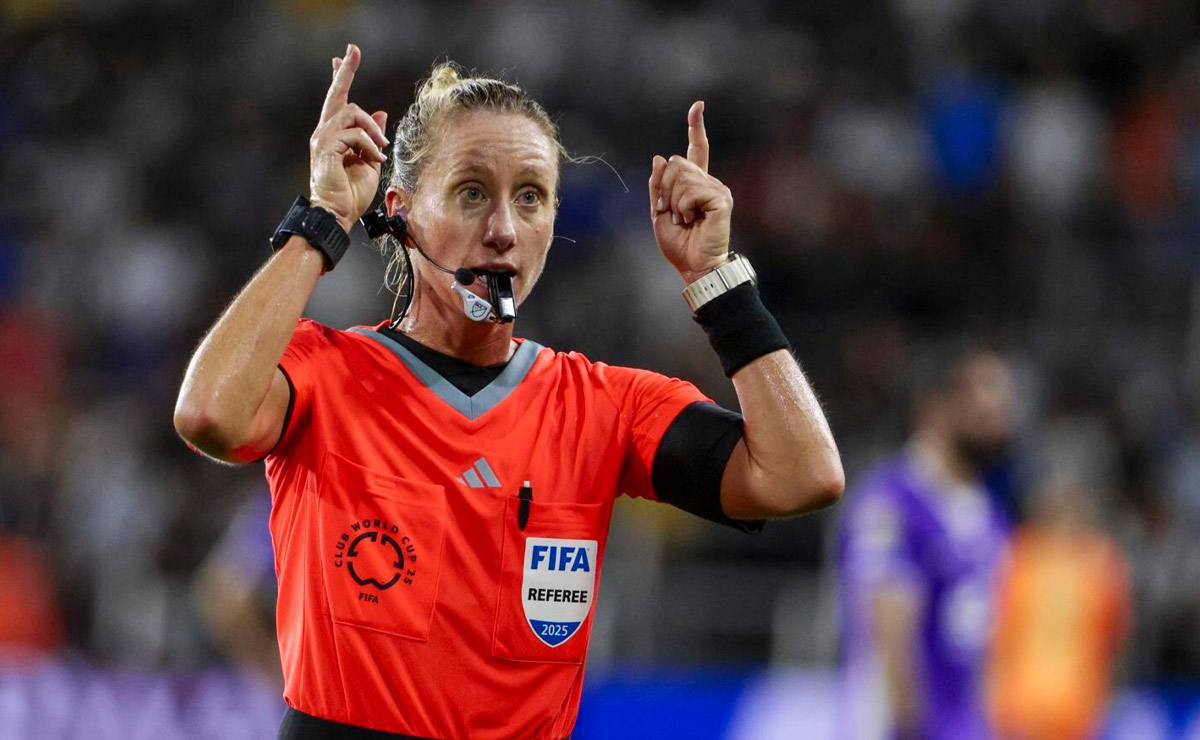
Few figures at a World Cup carry as much quiet pressure as the referee standing at the center circle before kickoff. Every decision they make will be replayed, argued over, and remembered long after the final whistle. Getting to that circle, though, is its own story, one shaped by decades of grinding domestic football, continental proving grounds, and a selection process as demanding as anything the players themselves go through.
The Long Journey Before World Cup Referees Are Selected
Somewhere on FIFA's international list sit 3,725 officials, spread across continents, languages and league systems. Only 4.5% of them will take charge of a match at the 2026 World Cup. The rest, hundreds of thousands of referees over the decades, train, travel and officiate without ever getting the call.
For those who do make it, the road rarely takes less than a decade. That journey moves through three distinct stages, each one narrowing the pool further, the domestic path, the continental resume, and finally FIFA's own evaluation. Each stage is where this story begins.
From amateur pitches to a FIFA badge
Every referee who ever walked out for a World Cup final started the same way footballers do, on a local pitch, in front of a handful of spectators, calling fouls in a lower league nobody outside the town was watching. Amateur football and the early rungs of a domestic pyramid are the only entry point there is.
To even be considered for FIFA recognition, a referee must be at least 25 years old and have spent a minimum of two years officiating at the highest domestic level in their country. Those two conditions sound modest on paper. In practice they represent years of steady, mistake free performance in matches that carry real pressure.
What comes next surprises many fans. The referee does not apply for FIFA status directly, the national football association does it on their behalf, and only a limited number of nominations are accepted from each country. That single detail creates a bottleneck few outside the sport ever notice, a talented referee can be held back simply because someone else in the same federation is having a better season at the same time.
Building a resume across continental competition
Once a referee earns FIFA status, the real test begins. Continental competitions become the proving ground, and there is no substitute for experience in the Champions League, the Copa Libertadores, the Europa League, the Copa America or the European Championship.
Consistency matters more here than almost anywhere else in the process. A single high profile mistake can undo years of careful work, and FIFA does not simply forgive one bad night on a big occasion.
Tom Henning Øvrebø learned that the hard way. His failure to award at least one clear penalty for Chelsea against Barcelona in the 2009 Champions League semi final became one of the most scrutinized refereeing performances of that era, and the Norwegian was left out of the 2010 World Cup entirely.
FIFA's long list and years of quiet evaluation
The long list forms two to three years before the tournament, and from that moment on, every candidate is under constant watch. FIFA committee members travel personally to see referees officiate in real conditions rather than relying only on reports.
What gets evaluated goes well beyond performance on the pitch. Physical condition, personality, and even the quality of a candidate's sleep have reportedly been part of the criteria FIFA considers before trusting someone with the sport's biggest stage.
FIFA has confirmed that evaluation for the 2026 tournament began immediately after Qatar 2022 ended. A referee stepping onto the pitch at the 2026 opener was very likely already being assessed four years earlier, long before the rest of the football world had turned its attention forward.
What FIFA Tests Before Handing Out A World Cup Badge
Making the long list is one thing. Surviving what comes after is another matter entirely. This is the hands on stage, where FIFA gathers candidates in person rather than relying on reports from a distance, and puts them through physical, technical and psychological testing before a single roster spot is confirmed. Nothing about the final selection is decided remotely.
The fitness demands behind the whistle
Referees are asked to complete a running test that pushes past 4000 meters, alternating bursts of sprinting at close to match intensity with short recovery windows in between. The test is built to punish anyone who trained for distance rather than for the stop start chaos of a real football match.
That demand only makes sense once you consider what happens once the whistle blows for real. A referee covers close to 10 kilometers over 90 minutes, a workload that places them in the same range as elite outfield players, and one that grows further if the match reaches extra time.
What makes that number more remarkable is the age gap most fans never think about. Players chasing a loose ball are often 10 to 20 years younger than the official trying to stay close enough to judge it properly, which is exactly why FIFA's physical bar keeps rising rather than staying fixed.
Technical review and psychological assessment
Physical readiness only tells part of the story. FIFA also reviews hours of footage from a candidate's past matches, studying how they read a game rather than simply how quickly they reach a decision, and pairs that with simulated exercises designed to test judgment under pressure.
Alongside that technical scrutiny sits something that would have sounded unusual a generation ago, formal mental health and personality evaluation. Pierluigi Collina himself has described the goal as ensuring officials arrive in optimal physical and mental condition, language that would not have appeared in any FIFA statement before the 2010s.
To support that side of the process, selected officials now travel with fitness coaches and physiotherapists, plus a dedicated mental specialist assigned specifically to help them manage the weight of the tournament. It is a level of institutional care that simply did not exist for the referees of earlier decades.
The preselection seminar and final cut
Months before a ball is kicked, candidates are brought together for an in person seminar where the last stage of evaluation truly begins. Testing, film study and interviews all happen face to face here, inside the same room, rather than through paperwork exchanged across continents.
For 2026, that seminar took the shape of a ten day preparation gathering in Miami, beginning on the 31st of May, the last shared experience for every candidate before FIFA locked in its final roster. Video match officials then moved on to Dallas, home of the tournament's broadcast operation, while the on field officials remained based in Miami.
The moment a referee learns they made the cut rarely arrives through a press release or a phone call. It is announced internally first, inside a hall full of peers who are all waiting to hear the same list read aloud, which is exactly how Howard Webb, Nestor Pitana and generations of referees before them first discovered their names had made history.
How Referees Are Selected For Each World Cup Match
Making the final roster is only the opening chapter. Once the tournament kicks off, the competition among officials becomes just as intense as the one unfolding on the pitch, and it plays out across three separate stages, the group phase, the early knockout rounds, and the closing rounds where an entire summer of work narrows down to a handful of names. Each stage strips away candidates for different reasons, some purely on merit, others through circumstances no referee can control.
The group stage as a first trial
Every official named to a World Cup roster walks into the group stage on roughly equal footing, regardless of how decorated their career already is. These opening matches function as a shared proving ground, the only point in the tournament where every referee is judged under comparable conditions before the field begins to separate itself.
That judgment is far from casual. FIFA's Referees Committee, chaired for years by Pierluigi Collina, studies every appearance in detail, cross referencing performance against the same standards applied during the years of evaluation that came before the tournament even began.
Appointments during these opening rounds are never locked in weeks ahead of time. A referee typically learns which fixture they will take three to four days beforehand, a decision built entirely around recent form rather than reputation earned in a previous tournament or a different competition altogether.
That short notice keeps the entire pool sharp from the very first whistle. A strong performance in one match buys nothing more than the chance to be trusted with another, and a single shaky display can quietly end a referee's involvement long before the knockout stage even begins.
The knockout rounds and the shrinking shortlist
The numbers tighten sharply once the group stage concludes. From a pool of roughly sixteen referees still under serious consideration, the field narrows to somewhere around five or six candidates by the time the tournament reaches its closing rounds, a reduction that happens in a matter of days rather than weeks.
An unwritten rule shapes this stage more than most fans ever realize. A referee handed a semi final is rarely given the final as well, since officiating the same nation across consecutive knockout matches would raise exactly the kind of suspicion FIFA has spent decades trying to avoid.
Nestor Pitana lived that pattern in real time during the 2018 tournament, taking charge of France in the round of 16 before eventually being trusted with the final itself between France and Croatia. Szymon Marciniak followed a similar arc four years later, overseeing an Argentina fixture in the earlier rounds of the 2022 tournament before being handed the final between Argentina and France.
Reaching a semi final therefore carries a strange double meaning inside the profession. It confirms that FIFA regards a referee as among the very best working at that tournament, while at the same time it almost always signals, quietly and without explanation, that the final will belong to someone else.
Why no referee can take charge of a match involving their own country
FIFA applies one rule through every round of the knockout stage without a single exception. No referee can officiate a match involving the nation they hold citizenship in, no matter how strong their performances have been or how close the final feels within reach.
The logic behind the rule is simple enough to state in a sentence. Even the faint appearance of bias, whether justified or not, risks undermining trust in a result that will be replayed, argued over and remembered for generations.
What makes the rule unusually harsh is how little control a referee has over it. It has nothing to do with skill or preparation and everything to do with how far their own national team happens to travel that particular summer, a variable no amount of fitness testing or film study can influence.
Bjorn Kuipers of the Netherlands understood that better than almost anyone. Widely regarded as a leading candidate for the 2014 final, he was ruled out entirely once his own country reached the semi finals that year, a national run of form that ended, in the same breath, his own chance at officiating the biggest match in the sport.
When History Decided Who Would Not Take The Final
Not every referee who missed a World Cup final lost that chance through a mistake on the pitch. Some of the most talented officials in the sport's history were removed from contention by forces entirely outside their control, a national team's unexpected run, a geopolitical wound that never fully closed, a single afternoon that defined a career. These are the stories the record books rarely tell in full.
Bjorn Kuipers and the Dutch run of 2014
By the summer of 2014, Bjorn Kuipers had already established himself as one of the most trusted referees on the planet, a name FIFA regularly placed in the biggest fixtures across Europe. Many inside the game considered him a genuine candidate to take charge of that year's final in Brazil.
Then his own country got in the way. The Netherlands reached the semi finals of the 2014 tournament, and under FIFA's conflict of interest rule, that run instantly removed Kuipers from consideration for the final itself, regardless of how strong his performances had been up to that point.
Kuipers later described the experience as a heavy blow, admitting the disappointment stayed with him well after the tournament ended. It remains one of the clearest examples of a referee undone not by his own decisions, but by the success of the team he happened to call his own.
Anthony Taylor, the Falklands and the choice that shaped 2022
Anthony Taylor arrived at the 2022 tournament with a resume few English referees could match, years of Champions League appearances, multiple FA Cup finals, and a reputation for handling the most demanding fixtures in the sport without losing control of them.
His path to the final looked open once England fell in the quarter finals, removing the one obstacle that would have automatically ruled him out. On paper, Taylor stood as the natural choice to take charge of Argentina against France.
Pierluigi Collina saw it differently. Given the long and unresolved tension between England and Argentina rooted in the Falklands conflict, he chose to bypass Taylor entirely and hand the final to Szymon Marciniak instead, a decision that had nothing to do with performance and everything to do with history refusing to stay in the past.
Tom Henning Øvrebø and one costly night against Chelsea
Tom Henning Øvrebø walked into the 2009 Champions League semi final between Chelsea and Barcelona as a respected referee with a growing reputation across Europe. By full time, that reputation had been permanently altered.
Multiple clear penalty appeals for Chelsea went unpunished that night, a series of missed calls that dominated headlines for days and turned Øvrebø into one of the most criticized officials of his generation. The consequences reached far beyond a single result at Stamford Bridge.
FIFA left him off the roster for the 2010 World Cup entirely. Øvrebø later admitted, in his own reflections on the match, that he sensed something had gone wrong well before the final whistle, a rare moment of a referee acknowledging in hindsight what an entire stadium had already decided in real time.
The Numbers Behind World Cup Officiating
Numbers rarely lie, and few corners of the World Cup reveal as much through data as its officiating teams. Behind every rule change, every added confederation slot, and every new fee structure sits a quiet record of how the role has evolved since 2018.
The growth is not subtle. FIFA's officiating pool has expanded from 129 match officials to 170 across just two tournament cycles, a jump tied directly to the move from 32 to 48 competing nations.
Compensation has followed a similar curve, rising sharply from one edition to the next as the tournament itself has grown in scale and commercial weight. What once felt like a modest allowance for elite referees now resembles a proper professional salary.
The table below lays out both trends side by side, showing how quickly the numbers have moved in less than a decade.
| World Cup | Referee base fee | Total officials |
|---|---|---|
| 2018 | 57000 | 129 |
| 2022 | 70000 | 129 |
| 2026 | 100000 | 170 |
Referee fee figures come from reporting by The Times rather than an official FIFA release, so these amounts should be read as reliable estimates rather than confirmed salary data.
The Whistle Behind Every World Cup Story
Every name on a World Cup roster carries a story most fans will never hear in full, a decade of quiet ambition, near misses decided by a nation's own form, and moments where history mattered more than performance. The referee walking onto the pitch for kickoff has already survived a selection process as demanding, in its own way, as the one facing the players around him.
That is what makes officiating one of the most overlooked threads running through the tournament's history. Behind every final whistle sits a person who spent years earning the right to blow it, shaped by federations, committees, and circumstances entirely outside their control.
If this look behind the whistle left you wanting more, our Historical Soccer World Cup section covers every tournament since 1930 in full detail, while our archive of semi-final records across all World Cups traces how officiating decisions have shaped the biggest matches the sport has ever produced.

Carlos Ramón
Football historian and editorial director of Historical Soccer. Specialist in World Cup history, classic tactics, and iconic matches.