England vs Panama Prediction and World Cup History
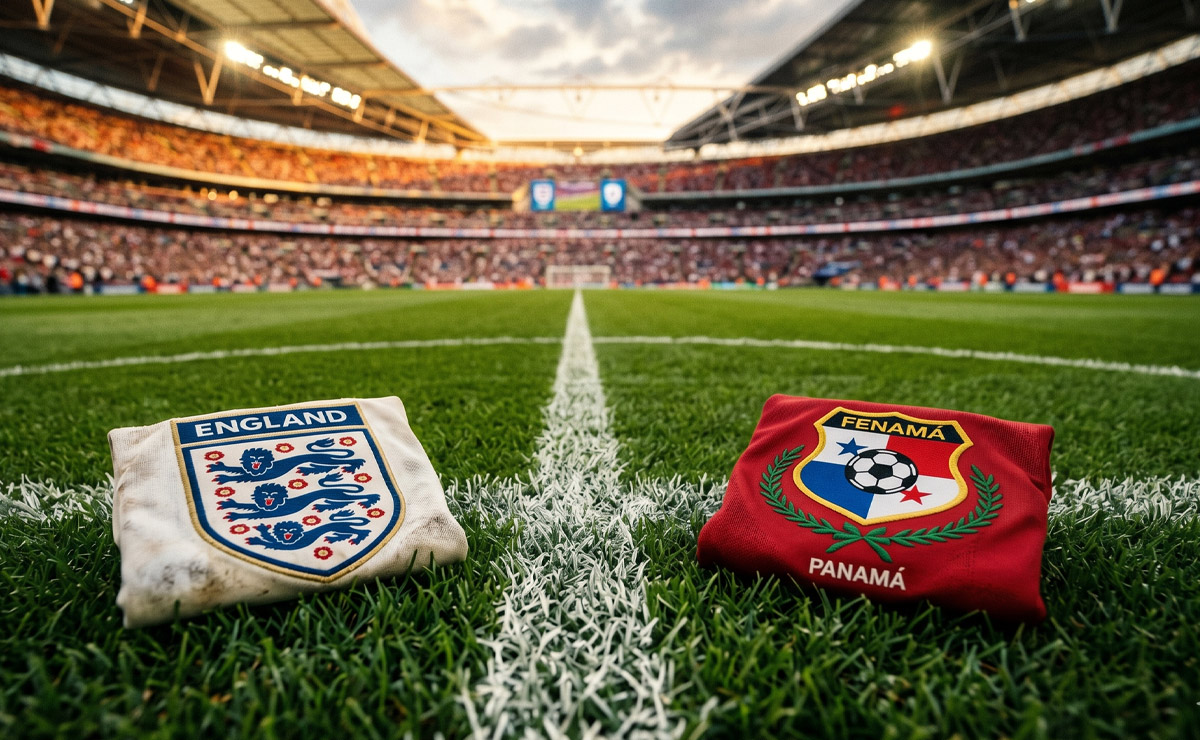
There are World Cup group stage games that feel like formalities, and there are games that carry something extra underneath the surface. England against Panama on 27 June 2026 is the second kind. These two sides have met at a World Cup before, the result was extraordinary, and now they find themselves drawn together again in Group L at the same stage of the same competition. What follows is my breakdown of everything that matters ahead of this fixture, from the history to the numbers to where I think the game is heading.
Group L and what is at stake on 27 June
On 27 June 2026, at 21:00 UTC, England and Panama meet at MetLife Stadium in East Rutherford, New Jersey for their third and final Group L fixture. MetLife is also the venue for the World Cup final, which gives the whole setting a particular weight even for a group stage match. For both teams, this game could define everything.
What each side needs will depend on how their first two fixtures unfold, but the stakes are real on both ends. England will want to finish the group phase with momentum. Panama will want to prove that 2018 was not the full story.
| Team | Played | Points | GF | GA | Situation |
|---|---|---|---|---|---|
| England | 2 | TBC | TBC | TBC | TBC |
| Croatia | 2 | TBC | TBC | TBC | TBC |
| Ghana | 2 | TBC | TBC | TBC | TBC |
| Panama | 2 | TBC | TBC | TBC | TBC |
Group standings to be updated once matchdays one and two are complete.
The group that brings them together again
Group L was never going to be quiet. England, Croatia, Ghana and Panama make for a group with genuine history running through it. Croatia are former finalists. Ghana have produced some of the most dramatic World Cup moments of the last two decades. And then there is Panama, a team appearing at only their second ever World Cup, carrying the weight of an entire footballing nation on their backs.
The reason this fixture carries more than the usual group stage energy is that England and Panama have met before, at a World Cup, in circumstances that were almost theatrical in their one-sidedness. The 2018 tournament in Russia produced a 6-1 scoreline that nobody from Panama will have forgotten, and that England fans remember with a complicated kind of fondness.
That result alone gives this rematch a storyline that no other group game in this edition can quite match. I find it genuinely rare that a third group game comes loaded with this kind of personal history between two sides, and it makes this fixture one I have been looking forward to since the draw was made.
As for the bracket implications, finishing first or second in Group L shapes the entire knockout path. The round of 16 opponent changes significantly depending on final standings, which means that even if both teams have already secured qualification before kick-off, the result still matters more than either side might publicly admit.
England at the World Cup
England have appeared at seventeen World Cups since their debut in 1950, and they have won the tournament exactly once, on home soil in 1966 under Alf Ramsey. Every generation since has carried that weight. Some came close. Most did not. The pattern of near misses, quarter-final exits and heartbreak on penalties is as much a part of English football identity as the trophy itself.
| Year | Stage reached | Result |
|---|---|---|
| 1950 | Group stage | Eliminated |
| 1954 | Quarter-finals | Lost to Uruguay |
| 1958 | Group stage | Eliminated |
| 1962 | Quarter-finals | Lost to Brazil |
| 1966 | Winners | Beat West Germany 4-2 |
| 1970 | Quarter-finals | Lost to West Germany |
| 1982 | Second group stage | Eliminated |
| 1986 | Quarter-finals | Lost to Argentina |
| 1990 | Fourth place | Lost to Italy |
| 1998 | Round of 16 | Lost to Argentina on penalties |
| 2002 | Quarter-finals | Lost to Brazil |
| 2006 | Quarter-finals | Lost to Portugal on penalties |
| 2010 | Round of 16 | Lost to Germany |
| 2014 | Group stage | Eliminated |
| 2018 | Fourth place | Lost to Belgium |
| 2022 | Quarter-finals | Lost to France |
| 2026 | TBC | TBC |
England's key players for 2026
Thomas Tuchel inherited a squad that had reached three major tournament semi-finals or better in four years, and his job was to sharpen what Gareth Southgate had built rather than rebuild from scratch. The result is an England side that looks more direct and more tactically demanding than the cautious version the country grew used to between 2018 and 2022.
Jude Bellingham is the player every conversation about this England team starts with, and for good reason. At Real Madrid he became one of the best midfielders in the world before turning 21, and at international level he carries a decisiveness in front of goal that previous England midfielders rarely possessed. He arrives at this tournament at the peak of his powers.
Harry Kane is the other name that defines England's attack. He is the country's all-time leading scorer, and his record at the 2022 tournament, despite the quarter-final exit, showed that he performs on the biggest stages. A World Cup winners medal is the one thing his career is still missing, and that hunger reads clearly every time he puts on the shirt.
How England qualified for 2026
England navigated UEFA qualifying with the kind of controlled efficiency that Tuchel demands from his clubs. They topped their group without serious alarm, and the performances suggested a team that had absorbed a new tactical identity without losing the core of what made Southgate's side hard to beat. The transition was smoother than many in the English press had predicted.
Tuchel's appointment was not universally celebrated when it was announced. Bringing in a German manager with no prior connection to English football felt like a gamble to some, and the early months of his tenure were watched with a particular kind of scrutiny. What he delivered across qualifying was enough to quiet most of the doubts, even if the debate about his long-term fit never fully disappeared.
The English press arrived at this World Cup in a familiar posture, somewhere between genuine belief and carefully managed expectation. There is a sense that this squad has the talent to go further than any England generation since 1966, and Tuchel has been careful not to dismiss that reading. Whether the tournament delivers on it is the question that will define his entire reign.
Panama at the World Cup
There are qualification stories, and then there is Panama in October 2017. Román Torres scored in the 87th minute against Costa Rica to send his country to their first ever World Cup, and the President declared a national holiday the following day. I have read about that night many times and it still reads like fiction. For a nation that had spent decades watching CONCACAF qualification from the outside, the moment was simply everything.
| Tournament | Group | W | D | L | GF | GA | Position |
|---|---|---|---|---|---|---|---|
| 2018 | Group G | 0 | 0 | 3 | 2 | 11 | 4th of 4 |
| 2026 | Group L | TBC | TBC | TBC | TBC | TBC | TBC |
2018 opponents: Belgium, England, Tunisia. Panama finished last in the tournament overall.
Panama's key players for 2026
The generation that carried Panama to 2018 was led by names like Blas Pérez and Gabriel Torres, two strikers who defined Panamanian football for a decade and gave the national team its first real attacking identity. Neither is part of this cycle, but the standard they set shaped everything that followed. The current squad has had to build its own identity from that foundation.
Thomas Christiansen has been in charge since 2020 and has turned Panama into one of the more competitive sides in CONCACAF. His work is not glamorous but it is consistent. Under him Panama reached the Gold Cup final in 2023 and the Nations League final in 2025, two results that confirmed this is no longer a team that simply makes up the numbers in regional competition.
The players to watch in 2026 include Cecilio Waterman, Adalberto Carrasquilla and Édgar Bárcenas, a generation with genuine quality in the final third. Arriving at a second World Cup with real tournament experience behind them, and with a coach who has built something sustainable, Panama are a different proposition to the side that lost 6-1 in Nizhny Novgorod eight years ago.
How Panama qualified for 2026
CONCACAF qualifying for 2026 was always going to be more competitive than 2018, with more places available but also more nations taking the process seriously. Panama moved through it steadily, never dominant but always present, accumulating the points that mattered when it counted. Christiansen's pragmatism was exactly what the qualifying format rewarded.
The regional context matters here. A Gold Cup final in 2023 and a Nations League final in 2025 are not just results, they are evidence of a programme that has learned how to compete at the sharp end of tournaments. Panama lost both of those finals, but reaching them at all placed them among the top two or three nations in CONCACAF across this entire cycle.
Qualifying for a second World Cup is a different kind of achievement to qualifying for a first. The first time it is history. The second time it is confirmation. For Panamanian football, 2026 means the journey to Russia was not a one-off moment of fortune but the beginning of something that has genuine legs.
England vs Panama head to head
There is only one competitive meeting between these two sides, and it happened to be one of the most one-sided matches in recent World Cup history. On 24 June 2018 in Nizhny Novgorod, England beat Panama 6-1 in a Group G fixture that was effectively over before half-time. Gareth Southgate's side led 5-0 at the interval, with John Stones scoring twice, Jesse Lingard adding a stunning volley, and Harry Kane completing a hat-trick that included two penalties. I remember watching it and feeling a strange mix of joy and mild discomfort at just how total the demolition was.
| Date | Competition | Result | Scorers |
|---|---|---|---|
| 24 June 2018 | World Cup Group G | England 6-1 Panama | Kane (22 pen, 45+1, 62 pen), Stones (8, 40), Lingard (36) — Baloy (78) |
Felipe Baloy's goal in the 78th minute deserves its own paragraph. He was 37 years old, a defender, and he had spent his entire career without ever playing at a World Cup. When his header went in against Jordan Pickford, Panama's players and supporters celebrated as if they had won the tournament. In the context of what the goal meant, they were not wrong to. It was the first goal Panama had ever scored at a World Cup finals, and the fact that it came against England in a 6-1 defeat did nothing to reduce its significance.
Eight years have passed since that afternoon in Nizhny Novgorod, and both teams have changed considerably. England have cycled through the latter stages of multiple tournaments, developed a new generation of elite players, and changed their manager. Panama have qualified for a second World Cup, reached two CONCACAF finals, and built a squad with genuine technical quality under Christiansen. The scoreline from 2018 tells you very little about what 2026 will look like.
What it does tell you is that England know how to punish Panama when the gap in quality is exposed, and Panama know exactly how painful that exposure can feel. That shared memory sits underneath this fixture whether anyone mentions it or not, and I suspect both managers will reference it in their own way during preparation. History between two sides at a World Cup is never just a statistic. It is a reference point that shapes how both teams approach the game.
England vs Panama prediction
England are the overwhelming favourite in every market for this fixture, and that reflects reality rather than bias. The gap in FIFA ranking, squad depth and tournament experience is substantial, and the betting odds across major platforms have consistently placed an England win at very short prices. Polymarket's implied probabilities tell a similar story, with England's chances of advancing from Group L sitting well above 90 percent across the qualification cycle, while Panama's probability of reaching the round of 16 has remained in the range of 15 to 25 percent depending on how their first two games unfold.
Beyond the result market, the more interesting territory is in the goals markets. The 2018 meeting produced seven goals, and while I would not expect another 6-1, England's attacking output under Tuchel has been consistent and Panama have shown defensive vulnerabilities at the highest level. If England have already secured qualification before this game, wholesale rotation becomes a genuine possibility, and that changes the calculus considerably. A rotated England side is still strong, but it is a different kind of threat.
| Market | Assessment | Reasoning |
|---|---|---|
| England to win | Strong value at short odds | Superior quality across all positions |
| Over 3.5 goals | Worth considering | Both sides tend to open up in must-win or low-pressure contexts |
| Both teams to score | Moderate interest | Panama scored in 2018 and have better attackers now |
| England to win to nil | Conditional | Less likely if Tuchel rotates and Panama are desperate for points |
| Correct score England 3-1 | Speculative but plausible | Reflects a competitive Panama without the 2018 collapse |
What the data says about this fixture
England enter this tournament ranked inside the top five in the world by FIFA, while Panama sit considerably lower, typically in the range of 60 to 80 depending on the update cycle. That gap is not just a number. It reflects the difference in the quality of leagues where the players operate, the depth of the squads, and the consistency of results at the highest level over a sustained period. On paper, this is a significant mismatch.
England's offensive record in World Cup group stages is one of the most productive in the tournament's history. They have consistently scored multiple goals per game in the opening round, and Tuchel's system, which presses high and transitions quickly, is particularly effective against sides that defend in a mid-block, which is exactly how Panama tend to set up. Christiansen's team is organised and disciplined, but they have been exposed by pace and verticality in CONCACAF competition, and England possess both in abundance.
What I keep coming back to is that predictions built entirely on the 2018 scoreline are lazy, and Panama deserve better than that. They are a more complete team now, they have players operating at a higher club level, and they arrive with the experience of having competed in two CONCACAF finals. My read is a comfortable England win, most likely by two or three goals, with Panama finding the net at least once. The 6-1 belongs to Russia. This is New Jersey, and it is a different game.

Carlos Ramón
Football historian and editorial director of Historical Soccer. Specialist in World Cup history, classic tactics, and iconic matches.